Thursday, August 23, 2012

100s of Indicators But These 10 You MUST Watch

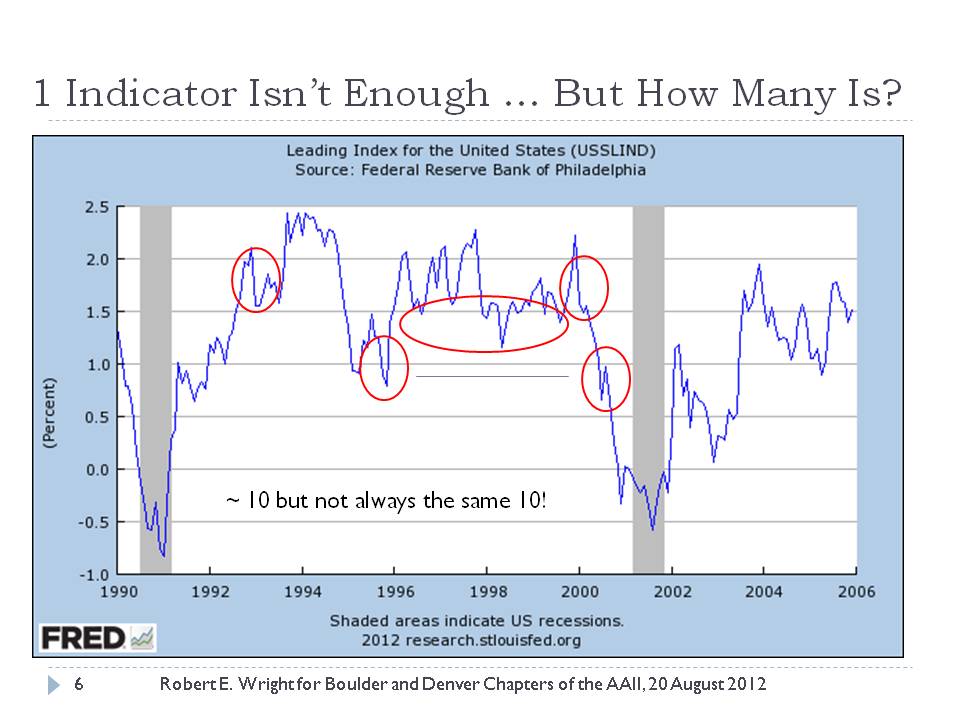
These are the PowerPoint slides I used during recent presentations to the AAII (American Association of Individual Investors) in Boulder and Denver, Colorado in support of my book with Simon Constable called The Wall Street Journal Guide to the 50 Economic Indicators That Really Matter.


Thursday, August 16, 2012

Healthcare and Insurance Reform: Innovation Zones, Vertically Integrated Mutuals, and Hybrid Policies

McKinsey & Co. was supposed to publish this in some forthcoming piece about mutuals and co-ops but just called to say that it isn't going to publish anything so controversial during a presidential race. So I append below my original draft. There is some chance that the edited version will eventually appear, presumably after the election, and quite a lot of their editing went into it, so I won't post the that version, just my original IP. I realize I haven't blogged in awhile but I'll have some investment-related stuff very soon.


The U.S. healthcare system is ill. Prices for medical services (and hence insurance premiums) have increased faster than inflation for decades and now comprise almost one fifth of aggregate economic output. No end to the trend appears in sight. Some American hospitals and doctors offer the best medical treatment in the world, bar none, but most Americans can afford access only to lower tier services that palpably lag global best practices. Tens of millions have no insurance whatsoever and suffer for it financially, psychologically, and biologically when they are sick or injured.
            In 2010, the U.S. federal government responded to those signs of illness by passing the Patient Protection and Affordable Care Act (PPACA). The mammoth law, much of which phases in incrementally with complete implementation coming in 2020, tries to address perceived problems by direct fiat. Millions of Americans are uninsured, so the law proclaims that they will be fined up to 2.5 percent of income (by 2016) if they do not acquire insurance (the so-called individual mandate). Pre-existing conditions raise insurance premiums or preclude coverage altogether so insurers will be forbidden to use them in underwriting decisions by 2014. Copayments reduce the number of scheduled appointments so they are to be banned for preventive care and checkups in 2018. And so forth.
            The U.S. Supreme Court (SCOTUS) may declare the individual mandate unconstitutional and could possibly strike down the entire law. Regardless of the court’s decision, which will likely come down to a single vote, America must face the reality that PPACA treats the healthcare system’s symptoms without doing much to cure its underlying disease, asymmetric information. Healthcare and its insurance is rife with adverse selection, moral hazard, and agency costs and until those problems are reduced the system will continue to perform in a suboptimal, if not dysfunctional, manner.
            In the context of healthcare, adverse selection is the greater propensity of people who are sick, or who are likely to become sick, to seek insurance. Insurers reduce it by increasing the premiums of people known to be sick or who have a history of illness and by declining to cover pre-existing ailments. They also mostly insure employed individuals, who unsurprisingly are on average healthier than people out of the labor force (other relevant factors like age and gender held constant).
            Moral hazard manifests itself in healthcare by the greater propensity of insured people to seek medical treatment for any given medical complaint. Insurers traditionally reduce it with copayments and deductibles. A copayment of $5 or $10 keeps insureds with the lowest incomes and most trivial ailments from utilizing scarce medical resources. Deductibles, healthcare expenses that insureds must pay out of pocket before insurance becomes effective, have a similar effect, at least until they are met.
            Agency problems occur when healthcare providers (HCPs) exploit the presence of insurance coverage to over-diagnose and over-treat patients. Doctors feel justified in breaking their Hippocratic Oath (the most widely used modern version of which enjoins doctors to avoid the “twin traps of overtreatment and therapeutic nihilism”) by pointing to the high costs of malpractice lawsuits: better to order yet another test lest the HCP be sued later on. To protect themselves from those agency costs, insurers limit what they will pay for specific procedures and refuse to pay for treatments that they believe are unwarranted. Unfortunately, most healthcare insurers today have incentives to behave in a short-sighted and niggardly fashion toward insureds, most of whom cannot change insurers, and whose deaths would benefit insurers’ shareholders.
            PPACA does not develop better ways of mitigating the costs associated with any of those three types of asymmetric information and in some instances, like abolishing the use of pre-existing conditions, even exacerbates them. (Some critics argue that its main purpose is to drive insurers out of business, thereby opening the door to a government-based healthcare system.) That PPACA does not address key economic issues is unsurprising given that it was clearly a political solution to what many took to be a largely, if not purely, political problem. A more economic, less hubristic approach would be to allow market participants to experiment to find ways of mitigating the problems of asymmetric information that plague the healthcare system. That might entail nationwide deregulation of healthcare and health insurance markets or, more conservatively, the establishment of one or more healthcare innovation zones (HCIZs) where such experimentation could lawfully take place. (Judging by reactions to PPACA in some parts of the nation, there would be no shortage of volunteer states or regions.)
            When free to look after their own interests, sellers and buyers of simple goods and services are so efficient at determining equilibrium price, quality, and quantity that only the most despotic governments intervene in the process, almost invariably with disastrous results. With more complex services, however, especially those involving a high degree of asymmetric information, governments become more heavily involved. The efficacy of government involvement varies depending on its exact nature but is often sufficiently uncertain to prevent a consensus from forming, at least among more empirically-driven (less ideologically-driven) policymakers and wonks. Moreover, the measuring rod against which the current healthcare system should be measured remains unclear. International comparisons with Canada, Netherlands, Switzerland, Cuba, and so forth are tricky, as are historical comparisons to earlier policy regimes.
            Given the obvious power of markets to solve difficult questions of production and distribution with the protection of, but without any guidance from, government, nations like the United States that purport to be dedicated to free market principles ought to compare the outcomes of regulated and unregulated markets. In other words, it should make its regulatory regimes compete with more market-based alternatives. (America’s failure to do this is one cause of otherwise outlandish claims that this policy or that politician are “socialist.”) Unregulated markets may not be perfect, but the nation would save tremendous resources, not to mention much angst, if they prove themselves superior to a regulated status quo. Based on my reading of the history of healthcare, insurance, and business in America, I believe that a relatively efficient private healthcare system would emerge if allowed to and can even speculate about what it might look like.
            First, HCPs and insurers would join forces in the same company, as many did before the Great Depression, because vertical integration reduces agency costs by uniting the interests of insurers and doctors and by reducing incentives to overcharge or over-treat. Throughout history, U.S. businesses have often merged in order to reduce dependency on market conditions and align the interests of suppliers and distributors. There is no obvious economic reason why HCPs and health insurers should not do likewise.
            Second, the most successful HCP-insurers (HCPIs) would be organized as mutuals, or in other words as for-profit corporations owned by their policyholders. Mutual accident, fire, life, and health insurers date to the nineteenth century, when elites anxious to help solve perplexing social problems lent their brains, energies, and expertise to mutual formation and operation. They acted not to enrich themselves directly – most were already well-off if not wealthy – but to improve the world in which they and their families lived by meeting the financial needs of the masses at the lowest possible cost.
Because non-bank corporations, including mutuals, were chartered by states, not the federal government, considerable variation reigned at first. The healthcare and insurance space was further enriched by the presence of numerous non-profit organizations ranging from free clinics to fraternal lodges. Even after an initial set of best practices emerged, ample room for innovators to test new organizational and policy forms against reality remained until the Great Depression. That great shock destroyed established institutions and practices and induced the federal government to favor joint-stock insurers and employer-based group policies, the flawed system left largely intact by PPACA.
Mutuals often dominated important segments of the insurance industry because their organizational form contains intrinsic incentives to provide safe, low-cost, long-term contracts. Mutual life insurers, for example, offer participating whole life policies that repay premiums to policyholders (in the form of so-called dividends) when mortality, expense, and/or investment returns prove better than expected. Lacking shareholders eager for short-term stock market gains, mutuals share profits with policyholders and invest safely for the long-term. Most mutual managers earn far less than their joint-stock peers and see themselves as stewards or risk managers rather than as risk-taking innovators.
For that very reason, mutuals are often criticized, sometimes accurately, for being unresponsive to changing market conditions. The most successful mutual insurers, like Guardian and MassMutual, stay energetic due to pressure from their sales agents, whose future commission streams depend upon appropriate policy innovations. The Guardian’s general agents (GAs), for example, play much the same role as large stockholders do in joint stock companies. Because their stakes in the mutual insurer cannot be sold nearly as easily as stocks, however, GAs have more incentive than stockholders do to encourage projects that maximize long-term value and minimize inappropriate short-term risks.
The most successful HCPIs would offer participating, non-cancelable (by the HCPI) policies providing both life and health insurance (hybrid). The actuarial problems involved in setting premiums for hybrid policies are non-trivial but not insurmountable (especially if participating policies are issued) and any additional cost is outweighed by the benefits hybrids would provide. The life insurance component effectively bonds the HCPI to provide a level of healthcare rationally consistent with the life insurance benefit. (No HCPI, for example, would deny a $50,000 surgery with a 95 percent chance of extending the life of a 40 year old patient for at least two decades if she was entitled to $1 million in life insurance because the investment returns on the $1 million and the continuation of premium payments would more than compensate.) In borderline cases, the HCPI could lower the death benefit in exchange for added medical care. Such policies would induce people to seek fewer heroic end-of-life treatments, which are currently a large portion of healthcare expenditures, because the costs would fall palpably and directly on their children and other life insurance beneficiaries.
Mutual HCPIs issuing hybrid policies would have strong incentives to minimize costs without endangering patient health. They would increase the number of qualified doctors and other providers, rationally allocate patients to the proper provider (e.g., nurse practitioner or physician’s assistant for simpler diagnoses), and provide policyholders with high levels of quality preventative care, rendering the government’s food pyramid, anti-smoking initiatives, and other preventative health programs unnecessary once again. Those incentives would be strengthened even further if patients received premium discounts during periods of illness.
            If left to their own devices, HCPIs would minimize adverse selection by issuing individual policies in utero, before any health screenings. Most parents would voluntarily purchase such policies for their unborn children because they would be cheaper than any issued thereafter, especially for children who turned out to have health problems. Abortion, contraception, gender reassignment, and other sensitive medical issues would all be left private, matters for policyholders and HCPIs to work out amongst themselves and not targets for politicians or pundits. 
Again, the conjectures proffered here are based on precedents from U.S. business history, especially the history of mutual life and health insurers. Healthcare and its insurance is humbling due to its complexity so HCPIs issuing hybrid policies in utero may or may not work. Under current policy, however, Americans will never know because nobody can lawfully test them, or any other healthcare-insurance innovations for that matter, in real markets. Without HCIZs, policymakers and their ostensible bosses, the American people, are effectively flying blind when it comes to healthcare reform. PPACA may not crash and burn; future court decisions, reforms, loopholes, or just plain luck may save it. Nobody should be surprised, however, if it fails to lower healthcare costs or improve outcomes. When costs reach 25 or 33 percent of GDP, will the federal government finally allow healthcare entrepreneurs to (re)introduce and test innovative policy and organizational forms or will it continue to pretend that it can solve major economic problems with politically-driven policies? Or will it nationalize and thus further politicize healthcare? Or will Americans continue to sink ever larger portions of their household budgets into an inefficient system grown too large and powerful to be reformed?

Saturday, July 14, 2012

Throw the Toll Gates Open!

I spent all of June traveling the toll roads of Pennsylvania, New York, and New Jersey. The amount of construction was considerable ... and rather disconcerting as many of the projects seem to have hardly advanced since my last major time spent in the area, in 2008-9. Yet, like millions of others, I had to stop and hand somebody money or throw quarters into a bucket (or have my newly re-acquired EZ Pass debited). Why should commuters pay full toll when the roads are slow due to seemingly never ending construction projects?

The founders, who formed numerous toll roads to tie their young nation together politically and economically, had a solution to bad roads and construction delays: throwing the toll gates open. Why not institute the practice adopted by New York in 1804,* which stipulated that turnpike commissioners could force turnpike companies to stop charging tolls if they determined that their roads' condition impeded the regular flow of traffic? Today, instead of having the brunt of the cost fall on stockholders (of which there aren't really any as most of today's toll roads are so called public corporations owned by governments), deduct any shortfalls in toll revenue from the pool in which turnpike executives draw their salaries and benefits. Under the new incentives, construction projects will be completed much more quickly and with much less waste of commuters' time and patience, guaranteed.

*For details, see Daniel Klein and John Majewski, “Economy, Community, and Law: The Turnpike Movement in New York, 1797-1845,” Law and Society Review 26, 3 (1992): 492-93.

Friday, July 13, 2012

LIBOR scandal Fubarnomics and the pressing need for real reform

Several years ago I published a book called Fubarnomics that argued that most of the FUBAR ("fouled" up beyond all recognition) aspects of our economy -- including construction, healthcare, higher ed, and the financial crisis -- were rooted in hybrid failures, in both market and government failures in other words.

The recent scandal over LIBOR is no different. The market failure here is palpable: asymmetric information allowed the bankers to lie about how much it cost their banks to borrow. The government failure is more subtle but is perhaps best exposed by the question: wtf? More specifically, how was it that these crucial transactions were not monitored? that even after it became clear there were problems with self-reporting nothing substantive was done? The answer, of course, is regulatory capture. The Fed, the Treasury, and the FDIC are Wall Street's hand maidens, not its policemen.

The LIBOR scandal is just another indication that the financial system is badly broken. I think we need to return to basics: non-profit, plain vanilla depository institutions (credit unions) for the bulk of us; mutual insurers; mutual asset managers paid by performance (mutual funds); partnership-only investment banks/LCFIs/hedge funds; deposits guaranteed up to $25,000 and life insurance to $250,000, and everyone else on the hook for losses. If any company, financial or otherwise, becomes Too Big To Fail (TBTF) it needs to be broken up before it crashes the economy and causes taxpayers billions. Anyone in a fiduciary position caught stealing or lying needs to expect serious jail time and a lifetime of poverty.

But ahhhh there is that regulatory capture again. Sensible reforms are impossible until Americans make them happen. Traditionally, they are supposed to do so at the polls but what to do when both political parties have also been co-opted and only offer a choice between Frick and Frack? Revolution? Not yet. First Americans need to flex their economic muscles and stop doing business with big banks, political parties, and anyone else standing in the way of serious reform.

Tuesday, May 15, 2012

We're Screwed! (Economically Speaking)

My word, personal finance experts are real bears! Check out the "What 25 Personal Finance Experts Desperately Want New Grads to Know" entry on Online Colleges. Here are some highlights:
  • be ready to pay off your debts for a long time
  • use public transportation and get a roommate
  • don't try to keep up with the Joneses
  • don't buy "luxury" items like all the crap you bought in college
  • save for retirement now (because Soc. Sec. won't be there for you later)
  • move back in with your parents!
No wonder the Occupy movement continues unabated. If these bears' advice turns out to be valid we're in for a heap of trouble.

Wednesday, March 28, 2012

Guns and Drugs from Washington to The Wire


By Robert E. Wright for Augustana College’s chapter of Phi Alpha Theta, 28 March 2012.
Strangely enough, I became an historian of the Early Republic in order to better understand current public policy debates. Politicians and pundits have long been pretty good at putting words into the mouth’s of the Founding Fathers. I don’t think that all our policy decisions need to be based on the thought of the Founders but when they are, they should be based on plausible historical interpretations.
After having studied the thoughts and deeds of numerous Founders for almost two decades now, I’ve concluded that sometimes the words that policy wonks put into the Founders’ mouths ring true. But too often they are a load of specious bull puckey. One particularly laughable claim is that the Founders believed that roads should be forever free. Some Founders favored local government roads but realized that even those had to be paid for, with labor and materials if not cash. Other Founders -- including George Clinton and Philip Schuyler of New York, Fisher Ames and Henry Knox of Massachusetts, and Stephen Girard and George Logan of Pennsylvania -- chartered for-profit turnpike companies that built long distance roads and then charged tolls to travel them.
Speaking of early corporations, the majority opinion in Citizens United is pure bunk that should undermine any remaining confidence in SCOTUS as it is currently constituted. To a man, the Founders would have shuddered at the thought of business corporations influencing American political processes and explicitly said so on numerous occasions. See my forthcoming book Corporation Nation for details. The Founders considered corporations a quote unquote person only analogically. For them, corporations were economic entities endowed with several privileges not accorded to traditional business partnerships. For example, corporations enjoyed perpetual succession, or in other words the right to change owners without having to dissolve the enterprise, and the right to sue and be sued in name of the corporation, rather than in the names of their often numerous owners. But to grant corporations civil rights like freedom of speech would have been viewed as preposterous because corporations were created by the government, initially literally by statute. Natural people, by contrast, were the creators of government under John Locke’s widely held theory of governance.
And of course there can be no doubt that the Founders would oppose Bank of America, Citibank, Goldman Sachs, JP Morgan Chase, Wells Fargo, and the other megabanks that fomented the financial crisis of 2008. Not only don’t I exclude Alexander Hamilton from that claim, I assert that he would lead the charge against them, not because they are banks, which would be sufficient justification for Thomas Jefferson and many of his followers, but because they threaten the government’s ability to repay its debts as promised. Hamilton would also stress how horrifically inefficient they are, while Jefferson would point to their uncanny ability to influence public policies in their favor.
The Founders’ views on the political dangers posed by banks and other corporations remained widespread throughout the 19th century and into the twentieth. In 1906, New York governor Frank W. Higgins told the New York Times: quote Political contributions by business corporations are illegal and ultra vires. ... The practice is morally as well as legally wrong. ... I recommend that the making of political payments by corporations be made a penal offense. Unquote. Ultra vires, by the way, was a legal doctrine that allowed the dissolution of companies that overstepped the very clear boundaries placed on their activities in their corporate charters.
I’ve also done a little work on the Second Amendment and here the progress over the last decade or so has been palpable. Historian and peace scholar Michael Bahleel [Bellesiles] inadvertently helped gun right’s scholars like myself by publishing a book called Arming America that claimed that the Founding Fathers owned few guns and most of the weapons they did own were broken and unwanted. Let me repeat that: Bahleel claimed that the Founding Fathers owned few guns and most of their weapons were broken and unwanted. It turns out that Bahleel engaged in some very shady practices to quote unquote prove his thesis. So shady, in fact, that it cost him his job at Emory University. The flurry of research that went into debunking his outrageous claims, however, greatly strengthened our understanding of the Second Amendment and that played a big role in recent advances in gun rights, tentative though they are.
Discussions of gun rights often turn into debates about drug policies because illicit drugs and gun violence are intimately linked. Some discussants claim that the Founders would support the suppression of marijuana, heroin, and cocaine while others have portrayed the Founders as literal potheads. The latter view is apparently due to the fact that some of the Founders grew hemp for industrial purposes and most drank copious quantities of alcohol on a daily basis. So they must have toked up, right? Somebody with the screen name of capital letter D actually wrote on one blog and I quote: Our country was basically started by Marijuana. I have to repeat that. According to D, which I hope was his or her grade in history class, Our country was basically started by Marijuana.
The former view, that the Founders would support the so-called War on Drugs, appears to rest on the conviction that the Founders were good Christians – and don’t even get me started on that claim -- and as good Christians would never do drugs, because drugs are bad, mmmm… kay. Again I quote: I think Jefferson or George Washington would have rather strongly discouraged you from growing marijuana and their techniques with dealing with it would have been rather more violent than our current government. Unquote That comes right out of the mouth of a former history professor you may have heard of … Newt Gingrich. I did not attend the New Hampshire town meeting in January where he said it because I had to teach interim … but I have seen a video of the event that does not appear to have been doctored or edited in any way. Unlike the videos on Finding Bigfoot, it was not grainy or jumpy and the sound was good, at least when Newt was speaking. Finding Bigfoot airs on Animal Planet, a rival of The History Channel, which produced a show in which an historian, the curator of the Hemp Museum, swears that the Founders were hooked on the chronic.
That unassailable tertiary source to the contrary notwithstanding, it is a little silly to argue that the Founders had strong views on marijuana, much less crack or meth. Perhaps the easiest way to establish that point is to read a newspaper article that I discovered in the 20 May 1803 Charleston Courier while working at the American Antiquarian Society about 15 years ago. I call it “Bowls, Bongs, and Blunts But Not Quite Brownies” but the original title was “Intoxicating Quality of Hemp.” Listen carefully:
     HEMP is cultivated in the plains of upper Egypt, but it is not spun into thread as in Europe, although it might probably answer for that purpose. It is, nevertheless, a plant very much in use. For want of intoxicating liquors, the Arabs and Egyptians compose from it different preparations, which throw them into a sort of pleasing inebreity, a state of reverie
that inspires gaiety and occasions agreeable dreams. This kind of annihilation of the faculty of thinking, this kind of slumber of the
soul, bears no resemblance to the intoxication produced by wine or strong liquors, and the French language affords no terms by which it can
be expressed. The Arabs give the name of keif to this voluptuous vacuity of mind, this sort of fascinating stupor.
     The preparation most in use from this hemp is made by pounding the fruits with their membranous capsules; the paste resulting there from is baked, with honey, pepper, and nutmeg, and this sweetmeat is then swallowed in pieces of the size of a nut. The poor, who sooth their misery by the stupefaction produced by hemp, content themselves with bruising the capsules of the seeds in water, and eating the paste. The Egyptians also eat the capsules without any preparation, and they likewise mix them with tobacco for smoking. At other times they reduce only the capsules and pistils to a fine powder, and throw away the seeds. This powder they mix with an equal quantity of tobacco, and smoke the mixture in a sort of pipe, a very simple, but coarse imitation of the Persian pipe. It is nothing more than the shell of a cocoanut hollowed and filled with water, through which a pungent and intoxicating smoke is inhaled. This manner of smoking is one of the most ordinary pastimes of the women in the southern part of Egypt.
     As well these preparations, as well as the parts of the plant that serve to make them, are known under the Arabic name of haschish which properly signifies herb, or plant of plants. The haschisch, the consumption of which is very considerable, is to be met with in all the markets. When it is meant to designate the plant itself, unconnected with its virtues and its use, it is called [illegible].
     Although the hemp of Egypt has much resemblance to ours, it, nevertheless, differs from it in some characters which appear to constitute a particular species. On an attentive comparison of this hemp with that of Europe, it may be remarked, that its stalk is not near so
high; that it acquires in thickness what it wants in height; that the port or habit of the plant is rather that of a shrub, the stem of which is frequently more than two inches in circumference, with numerous and alternate branches adorning it down to the very root. Its leaves are also not so narrow, and less dentated or toothed. The whole plant exhales a stronger smell, and its fruitification is smaller, and at the same time more numerous than in the European species.
What this source tells me is that early Americans were not conversant with the quote unquote intoxicating quality of hemp or the editor would have not used up valuable space in his newspaper to describe it in such detail. Contrast the article with the treatment of America’s current drug culture on three popular and critically acclaimed television programs, AMC’s Breaking Bad, HBO’s The Wire, and Showtime’s Weeds.
In Weeds, which is initially set in suburban southern California but later ranges throughout the West before landing in Manhattan, seemingly everyone knows about marijuana. All the major characters smoke or eat it and know how to score it. Or they deal it, sometimes by the dime bag and sometimes by the kilo. A few even know how to grow the stuff, inside, outside, in vans, bathtubs, the backrooms of front businesses, in ditches, and even in national parks. The main character, erstwhile suburban housewife and mother Nancy Botwin, initially has qualms about selling it to kids but eventually will sell a potent form of hash that she makes in her employer’s commercial clothes dryer to anyone with the cash. She does draw the line, however, at harder drugs like black tar heroin and will not brook involuntary prostitution. But the message of the show is that weed is cool even if it turns you into jailbait and your son into a cold blooded murderer.
Walter White, a former high school chemistry teacher, has no qualms about manufacturing and selling methamphetamine, so long as it meets his high standards and he gets a cut of the proceeds. In Breaking Bad, meth is not quite as ubiquitous as pot in Weeds but the unmistakable conclusion, for viewers today and presumably 200 years hence, is that early Third Millennium America had a pretty pronounced illicit drug culture. Nobody has to be told what drugs are, how to use them, or even what they cost in the street. While both Weeds and Breaking Bad become a little far fetched at times, nobody seriously questions the main premise that middle class Americans can become drug kingpins if they get cancer or their spouses die suddenly, apparently without life insurance. Weeds and Breaking are dark comedies to be sure but clearly millions of Americans find that premise amusing … and maybe even alluring, as several bored housewives admit to Nancy in Weeds. Interestingly, about a dozen college professors have been caught distributing illegal drugs in the last few years, though alas none here at Augustana. … To my knowledge.
Although it contains numerous humorous scenes, The Wire is a much more serious show that reveals just how deeply heroin and cocaine have permeated our society, from addicts like Bubbles, Johnny Weeks, and Sherrod to Baltimore’s political power structure, especially in the form of corrupt politician Clay likes to say Shiiiiiiiiiiiiit Davis. The series, which ran for 5 seasons in the mid-20 aughts, was so realistic that several real life drug gangs actually began to use some of the distribution and communication techniques it detailed. Two centuries hence, historians will use The Wire to outline America’s urban drug culture much the way they currently use the 1931 flick The Public Enemy or the 1922 and 1924 novels Babbitt and The Great Gatsby to unmask some of the intricacies of Prohibition.
The city of Baltimore felt compelled to officially blast The Wire, the realism of which threatened to cut into its tourism trade. The Port of Baltimore doesn’t attract as many ships as it used to and the water still smells a little funky, but it is pretty to look at and it’s treated enough so it doesn’t kill the sea critters in Baltimore’s amazing National Aquarium or the dinner patrons in nearby Lil Italy … at least not immediately. The Wire’s depiction of the drug infested areas of the city, some within Glock range of the Inner Harbor tourist zone, were just too accurate, a conclusion that I draw from personal experience having again visited the outskirts of some of the drug neighborhoods while attending a conference and conducting some research in Balmer last fall.
I think it safe to say that the Founders would not like modern Baltimore but that would not necessarily equate into a policy stance on drugs as other issues were rather more salient two centuries ago. In fact, I’m pretty sure that Jefferson, Madison, and Monroe, if not Washington himself, would point to modern Baltimore as evidence for the necessity of slavery, a fallacious conclusion to be sure but an irresistible one for anyone with a material interest in the peculiar institution. Calhoun, who came a little later of course, certainly would have used conditions in today’s Baltimore to advance a pro-slavery, anti-tariff, and anti-urbanization agenda because, heck, he used the condition of the Baltimore of his time to support those views.
On the other hand, every Founding Father would see that the promises laid out in the preamble of the Constitution were not being met in a city devoid of justice, domestic tranquility, or the blessings of liberty. And The Wire’s message about political corruption would have surely further aroused the Founders’ against the Citizens United decision because it shows so clearly how money corrupts absolutely. But a pro- or anti- drug message? I just don’t see it because drug use was not very high on the Founder’s agenda. Americans would of course eventually remonstrate against the abuse, some even the use, of tobacco, alcohol, and later opium. But the Founders were pretty quiet on the issue. That might have been because they were civil libertarians content to allow people to make their own life choices, as Ron Paul might argue, but it could also be that they simply had no widespread experience with addiction to substances other than tobacco, alcohol, sugar, and caffeine. If members of the Founding generation weren’t consuming pot, coke, or heroin, how could the Founders have held a view about their legality, at least one that we are bound to respect? I say that when it comes to drug policy, we allow the Founders to remain fast asleep, dutifully pointing their muskets and cannon at large corporations, especially inefficient, political system corrupting megabanks.


Thank you!

Thursday, March 22, 2012

GROUND RENTS: ANCIENT I/O MORTGAGES THAT STAVED OFF FORECLOSURES DURING THE DEPRESSION


In Philadelphia, Baltimore, and their respective suburbs, some homeowners still pay "ground rents." The term, which dates from the eighteenth century, is a misnomer as the payments represent interest on renewable 99-year or perpetual mortgages. Although the creation of new ground rents fell out of favor before World War II, ground rents and other types of long-term, interest-only mortgages have much to recommend them and are widely credited with making Philadelphia the "city of homes" and Baltimore the "city of home owners."

In the eighteenth and nineteenth centuries, lenders found in ground rents a secure, readily salable (liquid) long-term asset that generally yielded between five and six percent. Defaults were rare because loan to value ratios (LTV) were conservative, typically in the neighborhood of 50 percent, and the interest due any given quarter or year was negligible compared to the value of the real estate, providing borrowers with strong incentives to make payments. Moreover, in case of default, lenders could lawfully enter the home and seize and sell any personal property found at the address. Rarely was it necessary to repossess the real estate to keep an account current.

Homeowners liked ground rents because the contracts kept their housing payments relatively low and eliminated the refinancing risks that periodically crushed those whose mortgages fell due when interest rates were high, mortgage renewals were unavailable, or housing prices were plummeting, as during the Great Depression. Ground rents were extinguished when a homeowner bought his contract from the investor holding it. When market interest rates were relatively high, the contracts could be purchased cheaply. When they were relatively low, the contracts were dear. The key was that homeowners could decide if and when to purchase the contract, allowing them to ride out financial storms rather than be sunk by them. "It is worthwhile noting," wrote legal scholar Frank Kaufman in 1940, "that relatively few ground rent defaults occurred during the recent depression. In fact," he continued, "Baltimore has seen less of the foreclosure evil than have other large cities in which only ordinary mortgages are used."

That raises the question of whether widespread use of ground rents could have mitigated the crisis of 2007-8. They might have, even if the average ground rent LTV had increased to 100 percent and the contracts were securitized as mortgages were. Ground rents would have decreased borrower opportunism (moral hazard) by making it easier for lenders to force homeowners who continued to reside in their houses to keep their accounts current and, in the case of walkaways, to foreclose on the property. In addition, as interest rates fell following the crisis, the value of ground rents would have increased, offsetting to some degree losses realized on the sale of foreclosed properties. The vicious cycle witnessed since 2007 -- decreased home prices and liquidity leading to defaults that decrease home prices and housing market liquidity yet further, triggering yet more defaults -- may have been stopped sooner or even prevented in the first place. We will never know for sure, of course, but regulators should consider allowing some modern experimentation with these hoary instruments of home finance.

Friday, March 16, 2012

TSA Twice Mocked

The creators of South Park laid waste to the Transportation Security Administration (TSA) in their new episode (S16 E1) on Wednesday (3/14/12), equating it with a fictional Toilet Safety Administration charged with keeping people safe when sitting on their porcelain thrones. Hilarious!

Potentially more damaging to the TSA, however, is a recent, EZ-to-read infographic from Online CriminalJusticeDegree.com that details the TSA's (exorbitant) costs while exploring its (extremely meager) benefits. When o' when will we rid ourselves of this Civil Rights' destroying monstrosity, which might be more aptly called the Transportation Sodomizing Authority?

Friday, March 09, 2012

Hey Jon Stewart! This is what happens when ...

Hey Jon Stewart! "Politics getting in the way of women's healthcare" is what happens when a good (anything that people want) is not allowed to be freely traded: it becomes politicized. Nuts like RL come out of the woodwork and put a political spin on everything, especially politically controversial topics like contraception and extramarital sex. The closer we get to full implementation of the Obama healthcare reform, the louder and more frequent the bull ... oney about who has to provide what for whom will become. I know it is great material for political satire but it threatens to further polarize public discourse. A better solution is to back out of the Obama reforms and go right to the heart of the problem, the skewed incentives of HCPs (treat and treat and treat instead of make well) and insurers (deny coverage instead of being bonded to make rational decisions). If only you had read the copy of Fubarnomics I sent you shortly after it came out in 2010 you could be more of an agent for positive, lasting change in this increasingly troubled nation.